
October 7, 2026
gogoadmin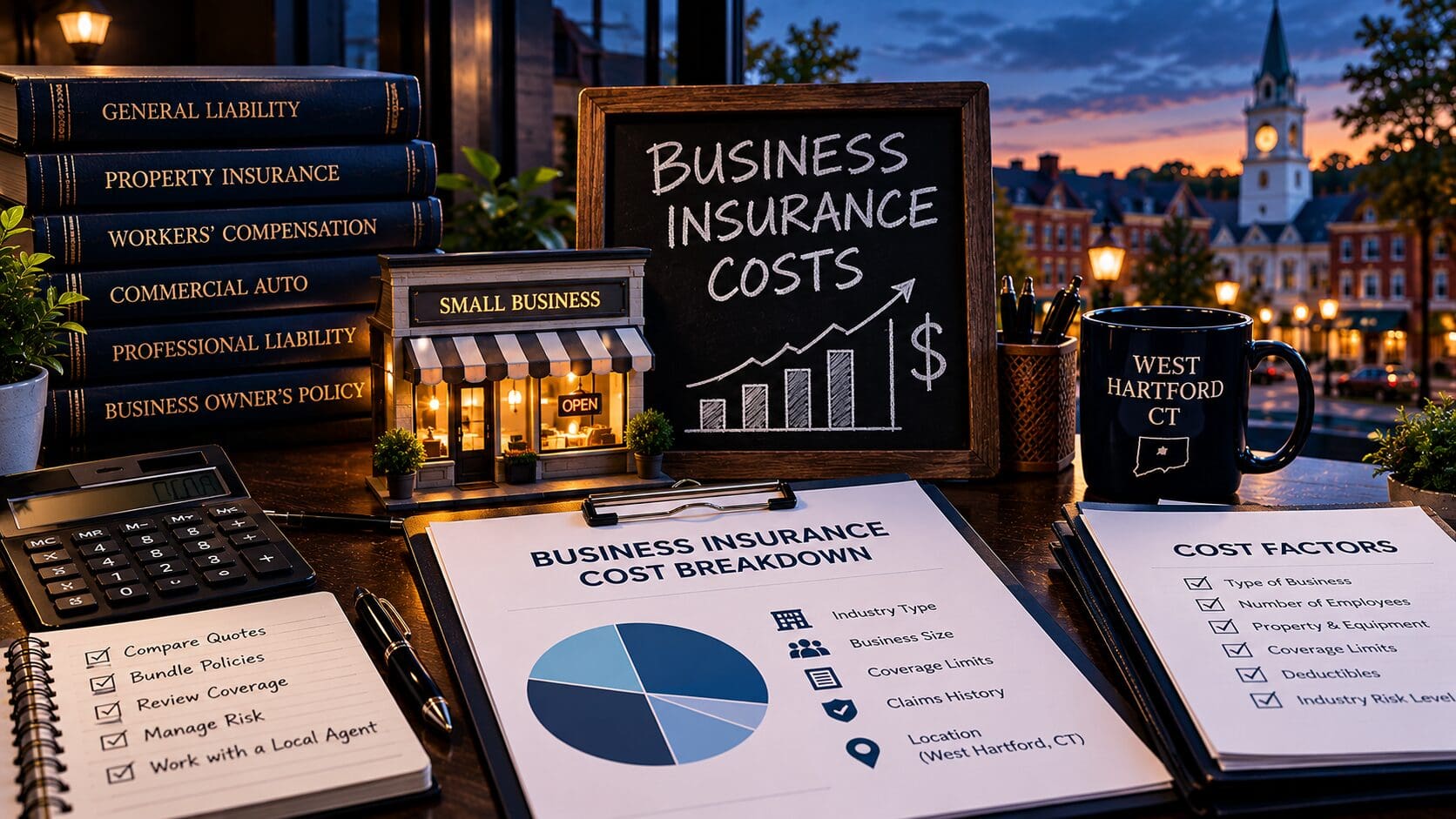
How Much Does Business Insurance Cost in West Hartford, CT?
Business insurance cost in Connecticut varies widely because premiums depend on your industry, payroll, revenue, coverage limits, deductibles, location, and claims history. Many small businesses pay a modest monthly amount for general liability, while workers’ compensation and commercial auto can cost more depending on employees and vehicles. A business owner’s policy can bundle coverages at a lower price than separate policies, and an independent agency can compare carriers so you can see commercial insurance quotes side by side.
How Much Does Business Insurance Cost in Connecticut?
There is no single price, because every business presents a different mix of risks. A home-based consultant with no employees may pay far less than a restaurant with a dozen workers and a delivery vehicle. Connecticut is also generally considered a higher-cost state for commercial insurance than the national average, in part because of local medical, repair, and legal costs. The most reliable way to learn what you would pay is to request quotes based on your actual operations, since published averages can only offer a rough starting point.
What Factors Affect Business Insurance Costs?
Insurers look at several things when pricing a policy. Your industry and the work you perform matter most, followed by your annual revenue and payroll, the number of employees, and the value of your property. Location, building age and construction, and the limits and deductibles you select also play a role. Your claims history and safety practices can raise or lower the price. Understanding these factors helps you spot which ones you can influence and which are outside your control.
How Much Does General Liability Insurance Cost in Connecticut?
General liability is often the most affordable core policy for small businesses. One 2026 industry estimate placed the average cost in Connecticut near one hundred sixty dollars per month, which is above the national average, though actual prices vary by industry, limits, and claims history. A low-risk office business may pay less, while a contractor may pay more. General liability insurance quotes should be treated as estimates until an insurer reviews your specific operations.
How Much Does a Business Owner’s Policy Cost?
A business owner’s policy generally costs less than buying general liability and commercial property separately, which is the main reason many small businesses choose one. The price depends on the same factors as other policies, including your industry, revenue, property values, and limits. A business owner’s policy is typically designed for lower-risk operations, so higher-risk businesses may need separate policies. Comparing a BOP with individual coverages shows whether bundling truly saves money in your case.
How Much Does Workers’ Compensation Cost?
Workers’ compensation premiums are generally based on payroll and the risk class of each job, then adjusted by your claims history. A clerical worker typically carries a lower rate than a construction worker. Connecticut rates are set annually through the state’s insurance regulator, with insurers applying them to your payroll. Because cost scales with payroll and risk, a growing business should expect it to rise. To understand who must carry it, read our workers’ compensation guide for Connecticut employers.
How Much Does Commercial Property Insurance Cost?
Commercial property premiums depend on the value of what you insure, the building’s age and construction, its location, and protections such as sprinklers and alarms. Whether you choose replacement cost or actual cash value also changes the price. Renters insure contents and improvements, while owners also insure the building. Commercial property insurance is often bundled in a BOP for smaller operations, which can reduce the overall cost compared with separate policies.
How Much Does Commercial Auto Insurance Cost?
Commercial auto pricing depends on the type and number of vehicles, how they are used, the drivers’ records, where you operate, and the limits you choose. A single car used for occasional client visits is generally cheaper to insure than a fleet of delivery vans or work trucks. Because accident costs can be high, liability limits are an important part of the price. Commercial auto insurance should be quoted based on real mileage and driver information.
What Does Professional Liability Insurance Cost?
Professional liability premiums vary by profession, revenue, contract types, and claims history. A small consulting firm may pay a modest amount, while professions with greater potential for costly errors may pay more. Limits, deductibles, and the retroactive date on the policy affect price as well. Professional liability coverage is often required by clients, so having a quote ready before you bid on contracts can save time.
What Does a Commercial Umbrella Policy Cost?
Umbrella policies add liability limits above your underlying coverage, and their cost generally depends on the limit you buy, your industry, and the strength of your underlying policies. Compared with the price of increasing every underlying limit, an umbrella is often an economical way to raise total protection. Commercial umbrella insurance may also be required by larger clients or lenders, so it is worth asking early.
Does the Type of Business You Run Change the Price?
Very much so. Insurers group businesses by the risks they present, so a bookkeeper, a restaurant, and a roofing company are priced very differently even at similar revenue. Hazards such as heavy equipment, food service, alcohol, heights, or hiring subcontractors tend to raise cost, while lower-risk, desk-based work generally lowers it. Describing your operations carefully and accurately matters, because misclassified work can lead to coverage disputes or premium adjustments after an audit.
How Do Deductibles and Coverage Limits Change Your Premium?
A higher deductible generally lowers your premium, because you agree to pay more of a small claim yourself. Higher limits raise it, because the insurer takes on more potential payout. The balance you strike should reflect how much you could comfortably pay out of pocket after a loss and how much risk you face from lawsuits or contracts. Choosing the lowest price without looking at limits and exclusions can leave gaps that cost far more than the savings.
Can a Small Business Lower Its Insurance Costs?
Yes, in many ways. Bundling policies in a BOP, improving safety practices, installing security or fire protection systems, and keeping a clean claims history can all help. Reporting payroll and classifications accurately avoids audit surprises. Some businesses pay annually to avoid installment fees, while others spread payments for cash flow. Shopping coverage with more than one insurer is among the most practical approaches, since carriers price risk differently.
Why Do Quotes for the Same Business Look So Different?
Insurers use their own underwriting rules, classifications, and appetite for different industries, so two companies can price the same risk differently. Quotes may also differ in limits, deductibles, exclusions, and optional endorsements, which can make a lower price less valuable than it appears. Reading each quote line by line and asking what is covered, what is excluded, and what the deductible is gives you a true side-by-side comparison. An independent agent can help explain the differences.
Do Payment Plans, Audits, and Renewals Affect What You Pay?
They can. Paying in full may avoid installment fees, while monthly plans spread out cash flow but can cost slightly more. Workers’ compensation and some liability policies are audited after the term, so the final premium reflects your actual payroll or revenue rather than your estimate. Renewal prices can also change with your claims record and market conditions. Reviewing coverage a few weeks before renewal gives you time to compare options instead of simply accepting the new price.
What Information Do You Need to Get an Accurate Quote?
Have your business type and operations, years in business, annual revenue, payroll, number of employees, property addresses and values, and details about vehicles and drivers ready. Prior insurance and loss history are usually requested too. The more accurate the information, the closer the quote will be to the final price. Starting with a full picture also helps your agent identify coverage you might otherwise overlook. For a rundown of which policies may apply, see a checklist of coverages for small businesses.
Does Your Location in Connecticut Affect Business Insurance Prices?
Location influences pricing in several ways. Insurers consider local claim frequency, weather exposure, crime rates, fire protection, and how close a property is to fire hydrants and responders. A West Hartford storefront may be priced differently from a similar space in another part of the state, and a business serving customers in several towns may be rated on where work is actually performed. Connecticut weather, including winter storms and flooding, can also affect property pricing and the availability of certain endorsements.
Should You Choose the Cheapest Business Insurance?
The lowest price is not always the best value. Coverage that excludes your main risk, sets limits too low, or comes from a carrier with poor claims service can cost much more when you need it. Balance cost with coverage terms, insurer reputation, and how well the policy fits your contracts. A thoughtful review of options helps you avoid both overpaying and being underinsured.
How Can You Get a Business Insurance Quote in West Hartford, CT?
Because costs depend on so many details, the most useful step is to request a business insurance quote and review the options with an agent. You can also learn more about our independent agency or contact our West Hartford office with questions. This article offers general information only, and actual premiums depend on underwriting and are not guaranteed.
Frequently Asked Questions: Business Insurance Costs
How much does business insurance cost for a small business in Connecticut?
It varies widely by industry, payroll, revenue, limits, and claims history, so the most accurate answer comes from a quote based on your actual business.
What is the average cost of general liability insurance in Connecticut?
One 2026 industry estimate placed it near one hundred sixty dollars per month, above the national average, but your price depends on your industry and coverage limits.
Is a business owner’s policy cheaper than separate policies?
Often yes. A BOP typically bundles general liability and property coverage at a lower price than buying each separately, though it is not suitable for every business.
What factors increase business insurance premiums?
Higher-risk industries, larger payrolls, more property or vehicles, higher limits, lower deductibles, and a history of claims generally increase premiums.
Does workers’ compensation cost more than general liability?
It can, particularly for businesses with larger payrolls or higher-risk jobs, since premiums are based on payroll and job classification.
How can I lower my business insurance costs?
Consider bundling coverage, raising deductibles carefully, improving safety practices, keeping accurate records, and comparing quotes from multiple carriers.
Why are my business insurance quotes so different?
Insurers use different underwriting rules, and quotes may include different limits, deductibles, and exclusions, so compare them line by line.
Categories: Blog